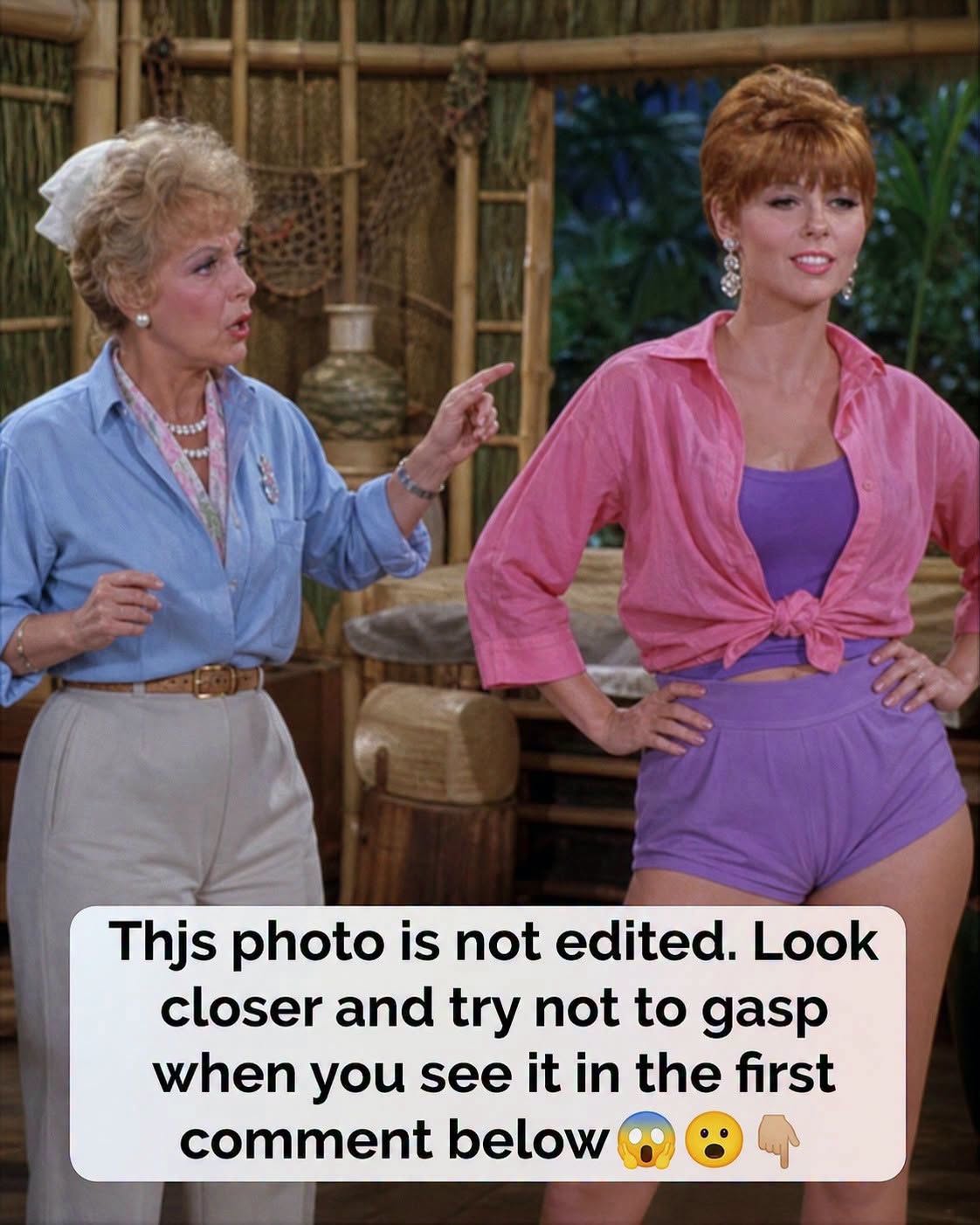
Gilligan’s Island created a familiar tropical world with practical sets, location footage, props, and production methods from an era before digital corrections. Close viewers can sometimes spot studio structures, equipment, or background details that were never intended to appear in the finished scene. The detail rewards a closer look because it connects an individual moment to the habits and expectations of its era.
The SS Minnow and its surroundings were not always presented with perfect consistency. Different locations and sets had to create the illusion of one remote island. Changes in scenery or construction occasionally revealed the practical work behind the fictional setting. What seems ordinary at first becomes more revealing when viewers consider the technology, routines, and social customs surrounding it.
Continuity mistakes also involved costumes and props. Jewelry could appear or disappear, clothing details changed between shots, and objects shifted positions without explanation. Fast television schedules meant crews often prioritized performance and completing the episode over correcting every small mismatch. Different viewers will notice different clues, which is part of the appeal. Personal memory and later knowledge change what each person sees.
Fans now treat those imperfections as discoveries rather than failures. Rewatching an episode becomes a game of noticing the human process behind the comedy. The errors reveal actors, designers, camera operators, and editors solving problems with the tools available at the time. The moment remains engaging because it is specific rather than polished into perfection. Its small irregularities make the people and setting feel immediate.
The mistakes do not remove the show’s humor or affection for its characters. They make the series a time capsule of mid-century television production. Instead of breaking the magic, a visible prop or continuity change reminds viewers that the imaginary island was built by real people working under real limits. Revisiting it is not only an exercise in nostalgia. It is a way to see how entertainment and everyday life preserve details that formal histories often overlook.
Popular culture survives through repetition, but every return reveals something new. A viewer may first notice the central performance and only later see a costume, production choice, social custom, or quick reaction in the background. Those secondary details keep familiar material alive because they invite observation rather than passive nostalgia. The experience becomes a conversation between the original moment and the viewer’s present-day knowledge.
It is also important to resist turning one visual clue into an absolute rule. Symbols, fashions, and gestures change meaning across communities and eras. Context includes location, personal intention, production limits, and the expectations of the people who first encountered the moment. Careful interpretation acknowledges those differences instead of using a single image to label a stranger or define an entire decade.
What lasts is the combination of recognition and surprise. The scene feels familiar enough to invite affection, yet specific details can still challenge memory or reveal how it was made. That mixture helps old programs, photographs, and public moments travel across generations. They preserve entertainment and style, but they also preserve ordinary decisions about technology, identity, and the way people presented themselves.
Reading the full sequence also guards against the distortion created by a short social caption. A caption can emphasize one surprise, image, or emotional phrase, while the underlying source supplies the circumstances needed to understand it. Preserving those circumstances keeps the account coherent and prevents unrelated material, page labels, advertisements, or promotional prompts from being mistaken for part of the story itself.
Taken together, these details explain the meaning of gilligans island mistakes became part of the shows lasting charm. The important point is not an unrelated teaser or a dramatic caption, but the sequence and facts described in the source. Keeping that focus preserves the people, relationships, and consequences that give the account its real significance.