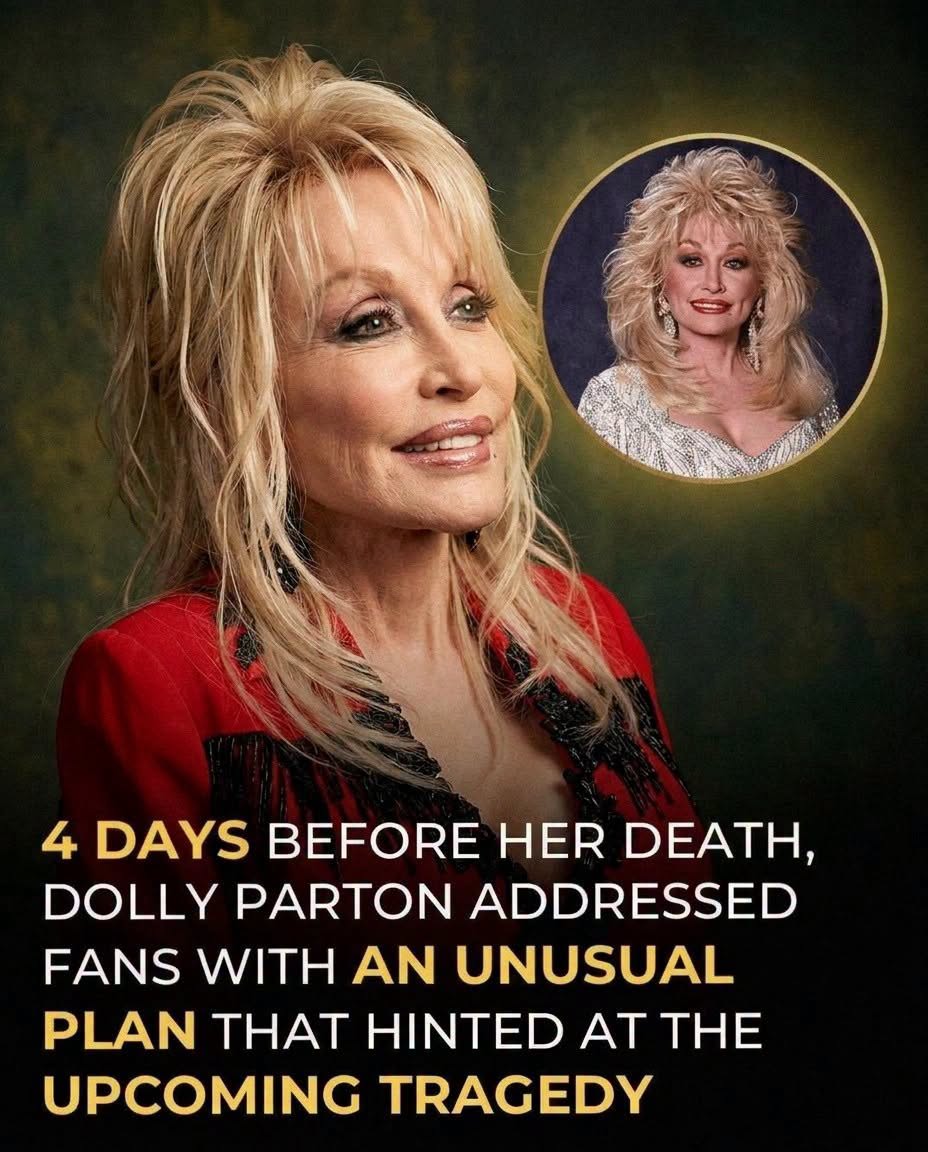
Four days before her death, Dolly Parton was still talking about the future. At 80, she admitted that health problems had forced changes in her schedule, but she did not sound like someone abandoning her work. She sounded like an artist finding new ways to continue.
Dolly said she had endured physically difficult times and revealed that some of her own medical issues had gone unattended while she cared for Carl Dean. Her husband of nearly 60 years died in March 2025. Grief was followed by the recognition that caregiving had pushed her health into the background.
She began responding to what her body required. A Las Vegas residency was postponed after doctors recommended procedures and later canceled. Dizziness and dehydration sometimes prevented her from traveling. When she could not appear in person at Dollywood, she joined by video and joked that her doctor had clipped her wings.
The joke was reassuring because it placed a temporary boundary around the problem. Dolly might be grounded, but her imagination was not. She kept working from wherever treatment allowed and continued discussing plans that stretched far beyond one missed appearance.
Among those plans was the Life of Many Colors Museum in downtown Nashville. Dolly wanted a space that could hold the story, costumes and creative history of her career in a city central to it. She was also involved in the SongTeller Hotel project and said the building felt like the first Nashville location that was truly right for what she envisioned.
Other projects transformed familiar pieces of her music into new businesses. Cup of Ambition Coffee drew its name from a lyric she had written more than 40 years earlier. The idea showed how readily Dolly could look at her catalog and discover another way for it to live in daily culture.
One early project explored avatar performances. The technology could allow audiences to experience a version of a Dolly Parton show even when she could no longer travel or perform conventionally. The concept was not simply about replacing a person with a digital image. It reflected her lifelong interest in preserving songs and performances while adapting to the future.
Her final public chapter also looked backward. On August 15, 10 days before her death, Dolly marked the 43rd anniversary of “Islands in the Stream,” her famous duet with Kenny Rogers. At the time, the post seemed like affectionate nostalgia. Afterward, it carried the weight of a farewell.
Kenny died in 2020, but their friendship remained one of the defining relationships of Dolly’s career. Their stage chemistry was so convincing that rumors repeatedly treated it as romance. Both denied that interpretation. They spoke instead of a bond protected by the decision not to risk a friendship they valued.
Dolly once called Kenny a soul mate, while he explained that the warmth audiences saw was genuine precisely because it rested on trust. Decades of performances and jokes made the partnership feel effortless. Her anniversary message now reads like a quiet return to someone who had already gone.
None of Dolly’s plans suggested that she believed her creative life was complete. Even when treatment restricted her movement, she was developing museums, products, performances and spaces through which her work could continue. She openly admitted that she was healing, yet she kept speaking in future tense.
That determination makes the last interview especially emotional. Dolly had begun caring for herself after years of caring for Carl, but only a few days remained. She could not finish every project personally. What she did leave was a framework built to outlast her: songs that generated new ideas, institutions that carried her story and technology intended to preserve the experience of her presence. Her body was slowing, but she continued planning as if creativity itself had no final date.