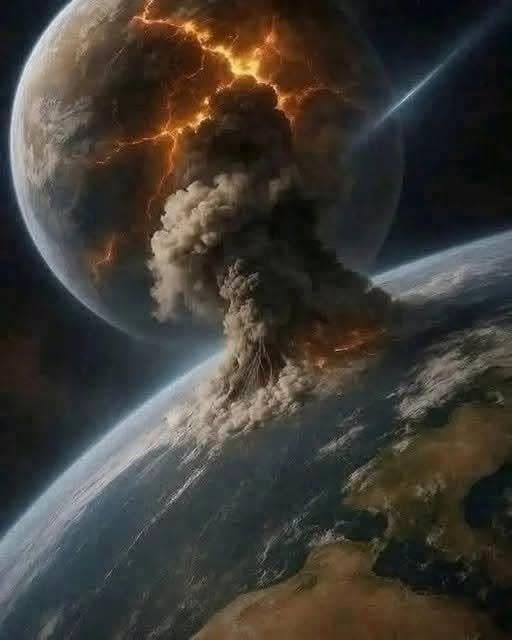
The truth didn’t explode into our lives. It slipped in quietly, disguised as routine data, cautious language, and calm scientific briefings. No sirens. No breaking news. Just a slow, unsettling shift from reassurance to unease as the numbers changed, the margins tightened, and the word “harmless” began to feel like a gamble we could no longer af… Continues…
We are, for once, spared. 52768 (1998 OR2) will not strike; it will glide past at a safe distance, a vast mountain of rock that will never touch our world. Yet its passage forces us to confront a fragile truth: survival is not guaranteed by luck alone. It is earned through vigilance, foresight, and the uncomfortable willingness to imagine disaster before it happens.
This asteroid becomes less an object in the sky than a mirror held up to us. It reveals how easily we are distracted by the noise of daily crises while a slower, quieter danger moves relentlessly on. The choice before us is stark. We can treat this encounter as a curious spectacle, soon forgotten, or as a final warning delivered without drama: prepare now, while we still have the luxury of time.
A safe passage can still be an opportunity to understand how people respond to uncertainty. The size of an object may sound alarming, but size alone does not tell the story of an encounter. The question of whether two paths intersect is different from the question of whether an object is impressive to imagine. Keeping those questions separate helps prevent fascination from becoming unnecessary fear.
The same distinction applies to dramatic language. A close encounter in the scale of space does not automatically mean an impact is expected. Descriptions need context to be useful. Without it, a reader can be left with a vivid image of danger and very little understanding of what is actually being described.
Observation is valuable precisely because it replaces some of that uncertainty with information. A developing picture can become clearer as measurements are considered and compared. That process is less theatrical than a sudden revelation, but its patience is part of its strength. It asks for attention to evidence rather than an emotional response to a headline.
Preparedness also benefits from proportion. Taking a subject seriously does not require treating every object as an immediate emergency. A calm approach leaves room for both interest and judgment. It allows people to appreciate an extraordinary feature of the natural world while remaining attentive to the actual question of risk.
The passage described here ends without a collision. That central point should remain visible even when the wider subject inspires questions about the future. A discussion of possible hazards in general is not the same as a prediction that this particular object will cause harm.
For the public, the most useful habit is to ask what an announcement means before imagining its worst possible interpretation. What event is being discussed? What is known about its outcome? Which statements describe observation, and which describe a hypothetical scenario? Those questions keep an encounter in perspective and make room for understanding instead of a cycle of alarm and relief.