Stephanie had given me one when I first moved in.
But I still stood outside the front door for several seconds before putting it into the lock.
That was how frightened I had become of my own home.
I opened the door.
The house was silent.
For a moment, I thought they weren’t home.
Then I heard Clinton’s voice from the kitchen.
“She actually walked out?”
Stephanie answered
“She did.”
“She left you with three carts?”
“She said no.”
There was a long silence.
Then Clinton laughed.
Not a nervous laugh.
Not a surprised laugh.
A cold one.
“Well,” he said, “let her learn what happens when she bites the hand that’s feeding her.”
I stood perfectly still.
The words didn’t hurt as much as they should have.
Perhaps because, somewhere deep inside me, I already knew.
I quietly closed my bedroom door.
Then I sat on the edge of my bed.
My hands were trembling.
I looked around the room.
The damp wall.
The cracked nightstand.
The plastic storage bins stacked in the corner.
Four years ago, Stephanie had promised me a private suite.
Instead, she had gradually turned my life into something I had to apologize for.
I opened the drawer beside my bed.
Under a stack of old photographs was a small black notebook.
I pulled it out.
I hadn’t shown that notebook to anyone.
Not Stephanie.Not Clinton.
Not even my late husband’s closest friend.
Inside were dates.
Names.
Amounts.
Receipts.
Bank transfers.
Notes about conversations.
And one particular page I had rewritten three times because my hands had been shaking so badly the first two times.
At the top of the page were four words:
What I Still Pay For.
I stared at the list.
Mortgage contribution.
Utilities.
Groceries.
Internet.
Insurance.
And then the largest item.
The one Stephanie had never known about.
I ran my finger down the page.
My finger stopped.
I closed the notebook.
Not yet.
I wasn’t ready to make that call.
At least, that’s what I told myself.
Around six thirty, the front door slammed.
Stephanie came into the house first.
Her heels struck the floor hard enough to make the picture frames tremble.
“Mom!”
I didn’t answer.
She opened my bedroom door without knocking.
She was still wearing the clothes from the supermarket.
Her face was red.
“You embarrassed me today.”
I looked up from my book.
“I didn’t say anything.”
“You didn’t have to. You walked away.”
“I couldn’t pay nine hundred and eighty dollars.”
“You could have called me earlier and told me.”
“I did tell you.”
“You said you didn’t have enough money.”
“I said I needed my medication.”
She rolled her eyes.
“Here we go again.”
Something about those four words made me put my book down.
“Stephanie.”
“What?”
“I need you to listen to me.”
She crossed her arms.
“Fine.”
“I am seventy-two years old.”
“I know.”
“I have one income.”
“I sold my home.”
“I gave you and Clinton almost everything I had.”
Her expression hardened.
“You offered.”
“Yes.”
“You weren’t forced.”
“No.”
“So why are you bringing this up now?”
I looked at her.
“Because today I realized you believed I had nothing left.”
She stared at me.
For just a second, something flickered across her face.
Fear.
It disappeared so quickly that I wondered whether I had imagined it.
Then she laughed.
“What does that even mean?”
“It means exactly what I said.”
She shook her head.
“You’re being dramatic.”
“I suppose I am.”
I picked up my book again.
She remained standing there.
“Dinner is tomorrow night,” she said.
“The dinner Clinton is hosting. We rescheduled it for tomorrow.”
“I won’t be cooking.”
Her eyebrows rose.
“You’re not cooking?”
“Then who’s going to?”
“I don’t know.”
She stared at me as if I had suddenly started speaking another language.
“You live here.”
“You eat our food.”
“Sometimes.”
“You use the electricity.”
“You use the Wi-Fi.”
“And now you can’t even help with dinner?”
I closed my book.
“I helped for four years.”
She opened her mouth.
Nothing came out.
For the first time, I saw her without the anger.
She looked tired.
Not sad.
Not guilty.
Just inconvenienced.
That realization hurt more than anything she had said.
“Mom,” she finally whispered, “what has gotten into you?”
I almost told her.
I almost said:
Nothing got into me.
Something finally came back.
My dignity.
But instead I said quietly,
“I’m tired.”
She scoffed.
She walked toward the door.
Then stopped.
“Oh, and Mom?”
“Yes?”
“Clinton said if you’re going to live here, you need to start contributing more.”
“How much more?”
She hesitated.
“Five hundred a month.”
I almost laughed.
Instead, I asked,
“For what?”
“For the household.”
“I already contribute.”
“Not enough.”
I nodded slowly.
“Okay.”
Her face softened with relief.
“Okay?”
“You’ll pay it?”
I looked directly into her eyes.
Her face changed.
“Then what did you mean by okay?”
“I mean I understand.”
Then she slammed the door.
I waited until I heard her footsteps disappear down the hall.
Only then did I open the black notebook again.
This time, I turned to the final page.
There was a phone number written there.
I had written it months ago.
I had never called.
Until that night.
I picked up my phone.
My thumb hovered over the number.
My heart was pounding.
Because once I made the call, there would be no going back.
I pressed dial.
The phone rang twice.
A man’s voice answered.
“Hello?”
I swallowed.
“Mr. Harris?”
“This is Margaret.”
There was a pause.
Then his voice changed.
“Mrs. Miller?”
“Is everything all right?”
I looked toward my bedroom door.
“No,” I whispered.
“No, it isn’t.”
Another silence.
Then he asked the question I had been waiting months to hear.
“Do you want me to proceed?”
I closed my eyes.
I could hear Stephanie and Clinton talking downstairs.
They were laughing.
Planning tomorrow’s dinner.
Planning what they would serve their guests.
Planning what I would supposedly contribute.
I opened my eyes.
Mr. Harris exhaled.
“All right. I’ll begin first thing tomorrow morning.”
I lowered my voice.
“And Mr. Harris?”
“Please don’t tell them yet.”
“You’re certain?”
“I am.”
He paused.
“Mrs. Miller, once this begins, they may become very angry.”
“They may try to contact you.”
“They may say things they don’t mean.”
I looked at the old wedding photograph sitting on my nightstand.
Donald was smiling in it.
His hand was resting on my shoulder.
I remembered something he had told me years ago.
Margaret, kindness isn’t the same thing as surrender.
At the time, I hadn’t understood.
Now I did.
“I’ve spent four years being afraid of their anger,” I said.
Mr. Harris said nothing.
“I think I’m finally more afraid of losing myself.”
He was quiet for a moment.
Then he said,
“I understand.”
The call ended.
I placed the phone on my lap.
For several minutes, I simply sat there.
Nothing had changed.
The house was still theirs.
The dinner was still tomorrow.
Stephanie still believed she could order me around.
Clinton still believed I was dependent on them.
And neither of them knew what I had just set in motion.
But there was one thing they didn’t understand.
The money I had given them was not the only thing I had protected.
Four years earlier, when Donald died, there had been one final piece of paperwork.
A document Stephanie had never seen.
A document Donald had insisted I keep separate.
A document that had quietly protected something worth far more than the groceries at that supermarket.
And tomorrow morning, for the first time, someone would come to the house to enforce it.
I turned off the lamp.
Then I heard footsteps outside my door.
Stephanie.
She stopped.
I held my breath.
The door handle moved.
Once.
Twice.
Then she walked away.
I waited until the footsteps disappeared.
Only then did I smile.
It wasn’t a happy smile.
It was the smile of a woman who had finally stopped running.
Tomorrow, my daughter was going to discover that the woman she thought she had trapped inside her house had never been as powerless as she believed.
And the first thing she was going to lose wasn’t money.
It was something she had taken for granted for four years.
Something she believed belonged to her.
Something that, technically, had never belonged to her at all.
PART 3 — THE END
At seven the next morning, someone knocked on the front door.
I was already awake.
I had barely slept.
Not because I was afraid.
Because I knew that by the end of the day, everything would be different.
I walked quietly into the kitchen.
Stephanie was sitting at the table, scrolling through her phone.
Clinton stood beside the coffee machine.
Neither of them looked at me.
Then the doorbell rang again.
Clinton sighed.
“I’ll get it.”
He opened the door.
A man in a dark suit stood outside, holding a leather folder.
“Mr. and Mrs. Miller?”
Clinton frowned.
“That’s us.”
The man looked past him.
“I’m looking for Margaret Miller.”
My heart began to pound.
I stepped forward.
“I’m Margaret.”
The man’s expression softened.
“Good morning, Mrs. Miller. I’m Thomas Harris.”
Stephanie immediately looked up.
“Who is he?”
Mr. Harris opened his folder.
“I believe we spoke last night.”
Clinton’s face changed.
“You know this man?”
Stephanie stood.
“Mom, what’s going on?”
Mr. Harris looked at me.
“Would you like me to explain?”
I nodded.
He turned toward Stephanie and Clinton.
“For the past four years, Mrs. Miller has been making a monthly payment on this property.”
Clinton laughed.
Stephanie stared at him.
“What payment?”
Mr. Harris continued.
“The payment is connected to a private agreement established before Mrs. Miller moved into this residence.”
Clinton’s smile disappeared.
“What agreement?”
I finally spoke.
“The mortgage.”
Silence.
Stephanie blinked.
“The mortgage on this house,” I said.
Clinton shook his head.
“This house is paid for.”
He looked at me.
“It can’t be.”
“It isn’t.”
I reached into my purse and removed a folded document.
“After your father died, I sold our house. I gave you most of the proceeds because you told me you wanted to make this place our family home.”
Stephanie whispered,
“Mom…”
“But I didn’t give you everything.”
Her face went pale.
“I kept enough to protect myself.”
Mr. Harris nodded.
“Your mother retained a substantial amount of her assets and used part of them to secure the legal interest she was promised in this property.”
Clinton grabbed the document.
His eyes moved rapidly across the page.
I looked at him.
He looked at Stephanie.
“You told me your mother gave us everything.”
“I thought she did!”
“You told me the house was ours!”
“It is ours!”
Mr. Harris calmly interrupted.
“Legally, no. Not entirely.”
Stephanie turned toward him.
“What does that mean?”
“It means your mother has been the person making the payments necessary to keep the property from entering default.”
I watched Stephanie’s face.
I could almost see the memories forming in her mind.
Every time she had complained about the electric bill.
Every time she had told me I was lucky to have a roof over my head.
Every time she had demanded money for groceries.
Every time she had said I was a burden.
And all along, she had been living under a roof I was still paying to protect.
But that wasn’t even the biggest secret.
I looked at Mr. Harris.
“Tell them the rest.”
He nodded.
“Effective today, Mrs. Miller has terminated the financial support she has voluntarily provided to this household.”
Clinton stared at him.
“Financial support?”
“The mortgage payment?”
“That is one of several.”
“What else?”
I looked at my daughter.
“The utilities.”
Her mouth opened.
“The internet.”
“The property insurance.”
“And several automatic payments connected to household expenses.”
Clinton’s face had gone completely white.
“You’ve been paying all of that?”
“For four years.”
Stephanie looked at me as though I were a stranger.
“But why?”
I didn’t answer immediately.
Because the truth was complicated.
I had done it because I loved her.
I had done it because I was afraid.
I had done it because after losing Donald, I was terrified of losing my daughter too.
So I kept giving.
And giving.
Until there was almost nothing left of me.
“I thought being a mother meant making sure your children never had to struggle,” I finally said.
Stephanie’s eyes filled with tears.
“And now?”
“Now I understand that helping someone isn’t the same as allowing them to destroy you.”
Clinton slammed the papers onto the table.
“This is unbelievable.”
“No,” I said quietly.
“What’s unbelievable is that I lived here for four years and you never once asked how I was surviving.”
Neither of them spoke.
I walked upstairs.
For the first time, I wasn’t going to hide in my room.
I was packing.
I had already arranged a small apartment across town.
It wasn’t large.
It wasn’t luxurious.
But it had sunlight.
A little balcony.
A clean bedroom.
And most importantly, a key that belonged only to me.
When I came downstairs with my suitcase, Stephanie was crying.
“Mom, please.”
I stopped.
She wiped her face.
“Don’t leave.”
“I already left.”
She frowned.
“Four years ago.”
Her face crumpled.
“I stopped being your mother and became your employee.”
“That isn’t fair.”
“No,” I said gently.
She walked toward me.
“I didn’t realize.”
“I didn’t know you were paying everything.”
“I thought you wanted to help.”
“I did.”
She lowered her head.
“Then why didn’t you tell me?”
I looked at my daughter for a long time.
“Because I wanted you to love me without knowing what I was worth.”
That sentence broke something in her.
She began to cry.
And this time, I didn’t rush to comfort her.
Not because I didn’t love her.
Because I finally understood that sometimes love means allowing someone to face the consequences of what they’ve done.
Clinton remained silent.
He looked at the paperwork again.
Then at me.
“So what happens now?”
I picked up my suitcase.
“Now you pay your own bills.”
He swallowed.
“And the house?”
He answered.
“Mrs. Miller retains the legal interest established in the agreement. The family can refinance, sell, or negotiate a settlement.”
Clinton stared at me.
“You’re making us sell the house?”
I shook my head.
“You’re adults. I’m simply no longer preventing you from dealing with your own finances.”
Stephanie covered her face.
I walked toward the door.
Then I stopped.
There was one final thing I needed to say.
“Stephanie?”
She looked up.
“I will always be your mother.”
She nodded through her tears.
“But I will never again pay for the privilege of being treated like one.”
Then I walked outside.
The morning air was cool.
The sky over Savannah was turning gold.
I stood on the sidewalk with one suitcase beside me.
For the first time in four years, I wasn’t carrying groceries.
I wasn’t carrying laundry.
I wasn’t carrying someone else’s responsibilities.
I was carrying only my own bag.
And somehow, it felt lighter than anything I had carried in decades.
Three months later, I received a letter.
It was from Stephanie.
I almost didn’t open it.
But I did.
She didn’t ask for money.
She didn’t complain.
She didn’t blame me.
She simply wrote:
Mom, I finally understand.
You didn’t abandon us.
You stopped abandoning yourself.
I read that sentence twice.
Then I cried.
Not because I regretted leaving.
Because I realized my daughter might finally have understood the difference between having a mother and having someone to use.
A week later, she came to my apartment.
She brought flowers.
She stood at the door for almost a minute before knocking.
When I opened it, she smiled nervously.
“Can I come in?”
I smiled back.
She stepped inside.
We sat together at my little kitchen table.
No demands.
No shopping lists.
No bills.
No accusations.
Just a mother and daughter trying to find their way back to each other.
After a while, Stephanie reached across the table and took my hand.
“I don’t expect you to forgive me yet.”
I squeezed her fingers.
“I already forgave you.”
Her eyes filled with tears.
“But forgiveness doesn’t mean things go back to the way they were.”
“It means we start again.”
She nodded.
“I’d like that.”
I looked out the window.
The sunlight was falling across the little balcony where I had placed two chairs.
One for me.
And, perhaps someday, one for my daughter.
I had spent four years believing that saying no would make me a bad mother.
I finally understood that sometimes the most loving word a mother can say is the one she was most afraid to speak.
No to being used.
No to being forgotten.
No to sacrificing everything just to keep someone else comfortable.
And no to the belief that growing old meant becoming invisible.
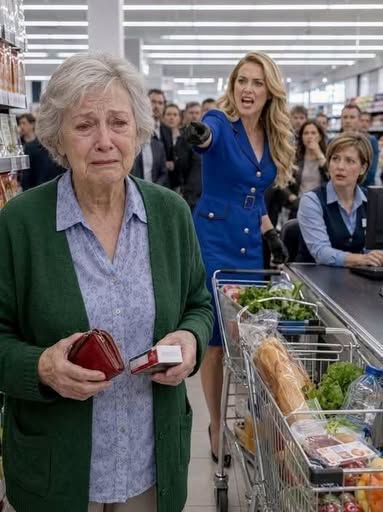
That night at the supermarket, my daughter thought I had walked away because I didn’t want to pay $980 for groceries.
She was wrong.
I walked away because, for the first time in my life, I realized that my life was worth more than the price of keeping everyone else happy.
And the thing I stopped paying for that night wasn’t groceries.
It was the cost of being loved only when I was useful.
I had paid that bill for far too long.
Finally, it was overdue.
And finally—
I stopped paying.